Football Legacy Manager 24
- 3.5
- Rating
- 10.00K
- Installs
- Free
- Price

 Analysis by App-foxy
Football Legacy Manager 24 is the kind of sports game I would suggest to someone who enjoys making decisions more than simply watching a match unfold. Instead of putting me directly on the field, it places me in the general manager’s seat, where the appeal comes from shaping a team over time and living with the consequences of each choice. That makes it a very different experience from a conventional football action game.
I approached it as a decision guide rather than a quick recommendation because management games can be surprisingly personal. Some players want immediate control, recognizable stars, and short matches. Others prefer building a plan, checking whether it works, and returning later to adjust it. This game is aimed firmly at the second group. My overall impression is that it offers a focused way to enjoy American football from the front office, but it is not the best fit if you need constant action or a highly visual match-day experience.
What to consider before choosing Football Legacy Manager 24
Before settling in, I’d decide what kind of routine I want from a football game: brief, purposeful check-ins or longer stretches of hands-on play. That distinction matters here because a manager’s role rewards attention to direction more than constant activity. I’d also treat the early sessions as a chance to learn my own preferred pace, rather than judging the game by whether it delivers an immediate highlight.
You May Also Like

 Blood Strike: 2.5 Anniversary
Blood Strike’s Loadouts Turn Every Drop Into a Tactical Gamble
A close look at Blood Strike’s custom loadouts: how fast access to signature weapons reshapes its battle royale rhythm, rewards preparation, and narrows the gap between fights.

 Pandora - Music & Podcasts
Pandora’s Music Is Easy to Start, but Harder to Recover
Pandora’s strength is its low-effort path from a seed to a station. Its weak spot is how much confidence it asks you to place in connection, setup, and quiet recovery.

 8 Ball Pool
 Is Built on Rivalries, Rematches, and Routine
A close look at the rivalries, rematches, shared routines, and unanswered safety questions that turn a quick pool match into a persistent mobile community.

 Samsung Music
’s Quiet Strength Is Playing What You Already Own
Its reach comes less from spectacle than from dependable access to a personal library. That simplicity is both the app’s strongest retention engine and its ceiling.

 AccuWeather: Weather Radar
AccuWeather Review: A Quick, Clear Forecast for Everyday Decisions
For everyday plans, the best forecast is the one you can understand quickly. AccuWeather makes rain timing, radar, and local conditions easy to act on, with a few trade-offs.

 Hill Climb Racing
Why Hill Climb Racing Still Turns Crashes Into One More Run
A tiny car, a bumpy hill and one more upgrade: Hill Climb Racing keeps resurfacing because its simple chaos makes every near-miss feel personal.
More From Our News Desk



The central question is whether you enjoy responsibility without direct control
The most important decision criterion is simple: do you like being responsible for results while another layer of the game handles the action? As a general manager, I found the satisfaction in deciding what kind of team I wanted to build, then seeing whether that direction held together. The game’s store summary describes the goal as building an ultimate legacy, and that idea is more useful than treating it as a single-season challenge.
That long-term perspective changes how I judge a win or loss. A poor result is not automatically a failure if it exposes a weakness I can address later. Likewise, a successful stretch does not mean every decision was sound. The enjoyable part is reading the situation, making a reasonable move, and accepting that a plan can need revision. Players who like sports strategy, roster planning, and gradual progress will understand the appeal quickly.
For someone choosing between this and an action-focused football title, I would ask how much time they want to spend thinking before the result. This is not a replacement for a game where you control individual plays. It is closer to a management notebook brought to life, with the pleasure coming from direction, patience, and adjustment.
How the presentation affects the experience
I also considered how much information a player is comfortable processing. Management games often ask me to compare several pieces of information before committing to a path. That can feel rewarding when I am in the mood to analyze, but it can feel slow when I only have a few minutes and want an immediate match.
The practical advantage is that the game can fit a different kind of routine. I can approach a session with one question in mind: should I strengthen the current plan, change direction, or give the existing group more time? That makes it suitable for short check-ins as well as longer planning sessions, although the depth is more enjoyable when I am willing to think through the consequences.
I would not choose it solely because it is free. The free entry makes trying it easy, but the real question is whether its management-first structure holds my attention. The game is free to install, with optional in-app purchases priced from $4.49 to $10.99 per item. That is worth keeping in mind before spending, especially if you are still deciding whether the core loop suits you.
Who is likely to enjoy it most
I see the strongest audience as fans of American football who enjoy the background decisions that usually happen away from the spotlight. It is also a reasonable choice for people who like sports simulations but do not want the reflexes required by an action game. You can focus on the shape of the organization rather than trying to execute every play yourself.
It may also work for a player who likes returning to the same project repeatedly. Building a legacy gives the experience a sense of continuity that a one-off match cannot provide. I found that the most interesting sessions were not necessarily the ones with the biggest immediate outcome; they were the ones where I could connect a decision today with the kind of team I wanted later.
On the other hand, I would steer away from it if your ideal football game means direct player movement, dramatic visual presentation, or rapid competitive action. The general manager role is the point, not an obstacle to get past. If you dislike planning, reviewing results, or waiting for a broader strategy to develop, the game may feel more like work than entertainment.
Where this manager game wins, and where another category may fit better
The useful comparison is not simply which football title offers more, but what I want to do with my attention. A manager game suits me when I want to weigh choices and revisit a developing project; direct-control games are a better match when I want quick feedback through play. In the next section, I’ll look at how that difference shapes the game’s recurring appeal and the kinds of alternatives that may fit better.
Its biggest strength is the feeling of building a direction
The strongest part of Football Legacy Manager 24 is its focus. It does not need to compete with every kind of football game because it is built around a different fantasy: becoming the person who decides what the team should become. I enjoyed that the experience encourages me to think beyond the next result and consider whether my choices are consistent with a larger identity.
That focus creates a useful trade-off. A more direct football game can give me excitement within seconds, while this one asks me to invest attention in preparation and judgment. In return, a good decision feels more personal. I am not just reacting to an opponent in the moment; I am trying to create a structure that can survive changing circumstances.
Another advantage is that it gives sports fans a way to play when they do not want a full action session. I can engage with football through planning rather than performance. For a busy player, that distinction matters. A short visit can be used to review the situation and make one meaningful adjustment instead of committing to a complete match.
A practical everyday scenario
Imagine having a short break during the day and wanting something more involving than a puzzle but less demanding than a live action game. I would open the manager, look at the current state of the team, and decide on one priority. Perhaps the group needs a clearer direction, or perhaps changing too much at once would make it harder to understand what actually helped. I would make one considered move, check the outcome when appropriate, and leave with a reason to return.
That scenario shows why the game can work well on a phone. It does not require me to recreate a whole evening around a match. The experience is about maintaining a project. At the same time, I would not treat it as a mindless break. Even a short session can lead to more thinking than expected, particularly when I am trying to understand whether a disappointing result came from one poor choice or from a deeper problem in the team’s direction.
Three less obvious ways to get more from it
My first practical tip is to avoid changing several things at once. In a management game, making many adjustments together may feel productive, but it makes the outcome harder to interpret. I get more useful feedback when I choose one priority, observe what follows, and then decide whether the next change is justified. This turns each session into a small test rather than a random overhaul.
Second, I would keep a simple mental distinction between a short-term fix and a legacy decision. A move that helps immediately may not match the kind of team I want to build over time. Thinking in those two layers prevents me from treating every setback as a reason to abandon the whole plan. It also makes the game’s long-term theme more meaningful, because the legacy is shaped by consistency as much as by isolated success.
Third, I recommend playing with a clear personal objective before opening the game. I might decide that the session is about evaluating the current direction, protecting stability, or testing a new approach. Without that focus, management screens can encourage unnecessary tinkering. With it, even a short visit has a purpose and produces information I can use later.
Where conventional alternatives may be better
The usual alternatives fall into different categories, and each wins for a different reason. An action football game is better when I want physical control, fast feedback, and the excitement of executing plays myself. A simpler arcade-style title is better when I want a quick match with little preparation. A broader sports-management simulation may be better for someone who wants a more expansive organizational experience and is comfortable with a heavier learning curve.
I would not call those alternatives direct replacements. They answer different questions. Football Legacy Manager 24 asks whether I can guide a team over time. An action game asks whether I can perform under pressure. A lightweight arcade game asks whether I can enjoy a complete burst of football quickly. Choosing between them should depend on the kind of involvement I want, not on which title appears more impressive at first glance.
The game’s average rating is 3.5 from around 128 ratings, with around 34 written reviews. I read that as a sign to keep expectations balanced rather than as a reason to dismiss it. A management game can appeal strongly to its intended audience while frustrating players who expected direct football action. The rating is useful context, but my own decision would still depend mainly on whether I enjoy a general manager’s role.
Friction points worth accepting before you start
The main limitation is the same feature that gives the game its identity: I am not the player on the field. If I want every result to reflect my timing and execution, the manager viewpoint may feel distant. There can also be a slower emotional payoff because the pleasure comes from seeing a plan develop rather than from an immediate highlight.
Another possible friction point is patience. A long-term project benefits from restraint, but not every session delivers a dramatic turning point. I sometimes had to accept that the right decision was to observe rather than constantly interfere. Players who need frequent rewards may find that less satisfying than those who enjoy gradual progress.
The optional purchases are another consideration. Since the game is free to start, I would first spend enough time learning whether the management loop itself is enjoyable. The available purchase range is not a reason to avoid the game, but it is a reason to decide on a personal spending limit before buying anything. That keeps the choice based on enjoyment rather than momentum.
What switching from another football game feels like
The cost of switching is mostly mental, not financial. If you are coming from a direct-control football game, you will need to stop judging the experience by how quickly you can influence a play. Your role changes from executor to planner. That can feel less exciting at first, but it becomes more rewarding once you start valuing the quality of a decision instead of the speed of an action.
If you are coming from another management game, the switch may be easier because you already understand the pleasure of building a project over time. Even then, I would give yourself room to learn the game’s rhythm rather than importing assumptions from another title. The best approach is to treat the early period as orientation: identify what matters to you, make measured choices, and avoid chasing instant perfection.
There is little reason to delete an action game just to try this one. They can serve different moods. I would keep the action title for moments when I want direct competition and use this manager when I want a slower, more thoughtful football session. The question is not which one is universally superior; it is which one matches the time and attention I have available.
Device access and basic expectations
The game is available for Android users running version 5.0 or later, and its current version is 24.1.16. That makes it accessible to a wide range of Android devices, though the exact feel will still depend on the phone’s screen, speed, and how comfortable you are reading management information on it.
It is rated for Everyone, so the content is broadly suitable from an age-rating perspective. I would still explain the management focus to younger players or anyone expecting an action game, because suitability and enjoyment are different questions. The rating tells me the game is broadly accessible; it does not mean every player will appreciate its slower strategic style.
Hockey Legacy Manager is the developer behind the game, and the title had passed 10K+ installs when I reviewed its position in the Android ecosystem. That gives it a smaller, more focused presence than the biggest sports franchises. For me, that reinforces the idea of approaching it as a specialized management game rather than expecting the scale or presentation of a major mainstream football release.
My recommendation after weighing the trade-offs
I recommend Football Legacy Manager 24 to players who want American football from the general manager’s perspective and who enjoy making decisions that matter over time. It is especially appealing if you like returning to an ongoing project, testing a strategy carefully, and accepting that improvement may come through several small choices rather than one spectacular moment.
I would skip it if your priority is direct control, instant action, or a visually driven match experience. In that case, an action-focused football game will probably fit better, while a broader management alternative may suit you if you want a more expansive simulation style. This title makes the most sense when its focused role is exactly what you are looking for.
For anyone undecided, my advice is to start without spending and judge the first sessions by one question: did I enjoy thinking about what the team should become? If the answer is yes, the free entry gives you a sensible way to continue exploring the legacy-building loop. If the answer is no, extra purchases will not solve the basic mismatch.
My final verdict is that Football Legacy Manager 24 is a focused, accessible sports-management game rather than a conventional football match game. I like it because it gives planning a clear purpose and makes the player responsible for a team’s direction. Its modest rating and smaller audience suggest that it is not for everyone, but that is not necessarily a weakness. For the right player, the quieter general manager role is precisely what makes it worth trying.
FAQs for Football Legacy Manager 24
01What is Football Legacy Manager 24?
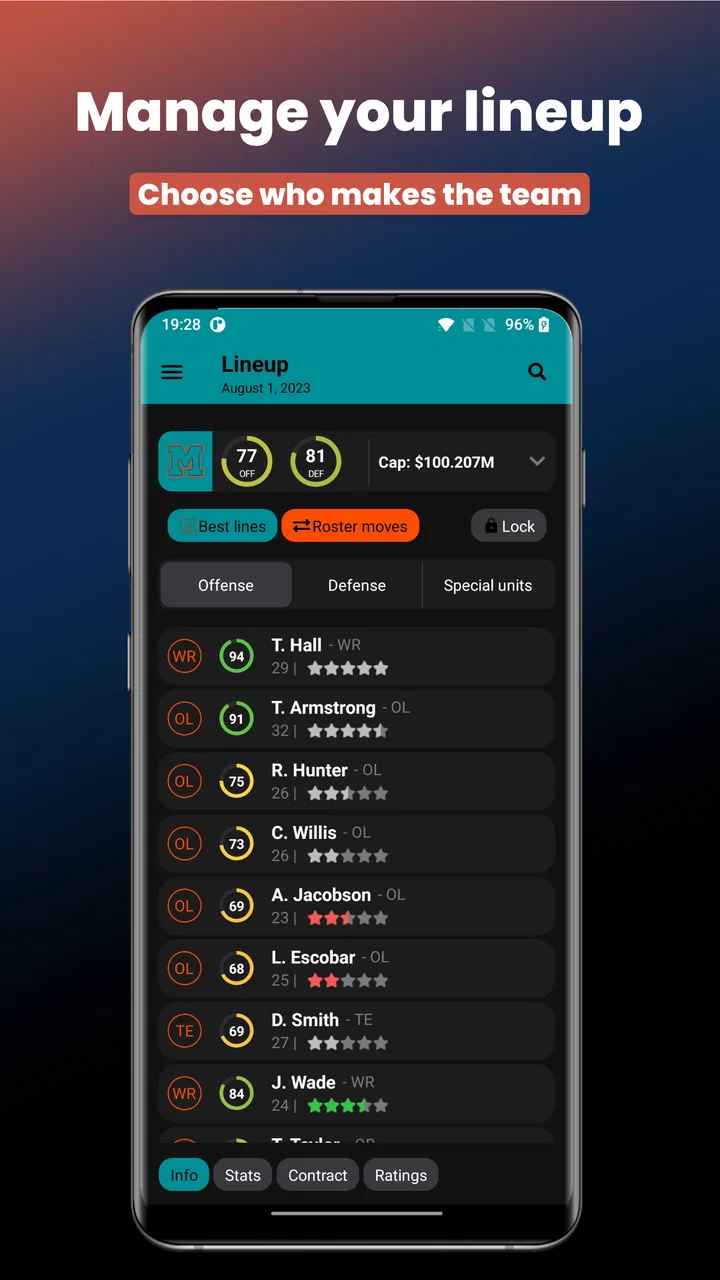
Football Legacy Manager 24 is a football management simulation game in which you take control of a club and handle the responsibilities of a manager. You can shape tactics, select lineups, manage transfers, develop players, and guide your team through multiple seasons. It focuses more on strategy, planning, and decision-making than on directly controlling players during matches.
02Can I play Football Legacy Manager 24 offline?
Football Legacy Manager 24 is designed primarily as a single-player management experience, so many of its core features can be enjoyed without constant internet access. However, certain functions may depend on connectivity, including updates, cloud-related services, advertisements, or optional online content. It is recommended to launch the game while connected at least once and check the specific requirements on your device.
03What can I manage in Football Legacy Manager 24?
The game offers control over several important areas of a football club. Depending on the mode and competition selected, you can organize formations, choose match tactics, negotiate transfers, renew contracts, develop younger players, and manage squad depth. Your decisions can affect results across an entire career, making long-term planning just as important as choosing a starting eleven.
04Is Football Legacy Manager 24 suitable for beginners?
Football Legacy Manager 24 can be enjoyed by beginners, although its management systems may take some time to understand if you have never played a football simulator before. New players should begin with straightforward tactics, avoid making too many squad changes at once, and review match feedback carefully. Experienced fans will likely appreciate the deeper strategic options and long-term career planning.
05Does Football Legacy Manager 24 include in-app purchases or advertisements?
The availability of advertisements, premium features, or in-app purchases can vary depending on the version, platform, and distribution store. Before downloading, check the official Google Play or App Store listing for the latest monetization details. If purchases are offered, they may provide convenience or additional content, but the main management experience should be evaluated based on the features available without spending extra money.
Pros
- Deep squad management with transfers
- contracts
- tactics
- and youth development.
- Large database of clubs and players offers plenty of long-term career variety.
- Matches progress quickly
- making it easy to manage several seasons.
- Detailed statistics help you evaluate player form and team performance.
- Offline play makes it convenient for managing your club without a connection.
Cons
- The interface can feel dense and take time to learn for new managers.
- Some menus require frequent tapping when handling large squads.
- Match presentation is limited compared with fully visual football games.
- Player and club data may not always reflect the latest real-world changes.
- Long saves can become repetitive once your team reaches consistent success.

Football Legacy Manager 24
Gallery